Where to sell your device, and when each route wins
Carrier trade-in, selling it yourself and comparing buyback offers each win in a different situation, and this is how to tell which is yours.
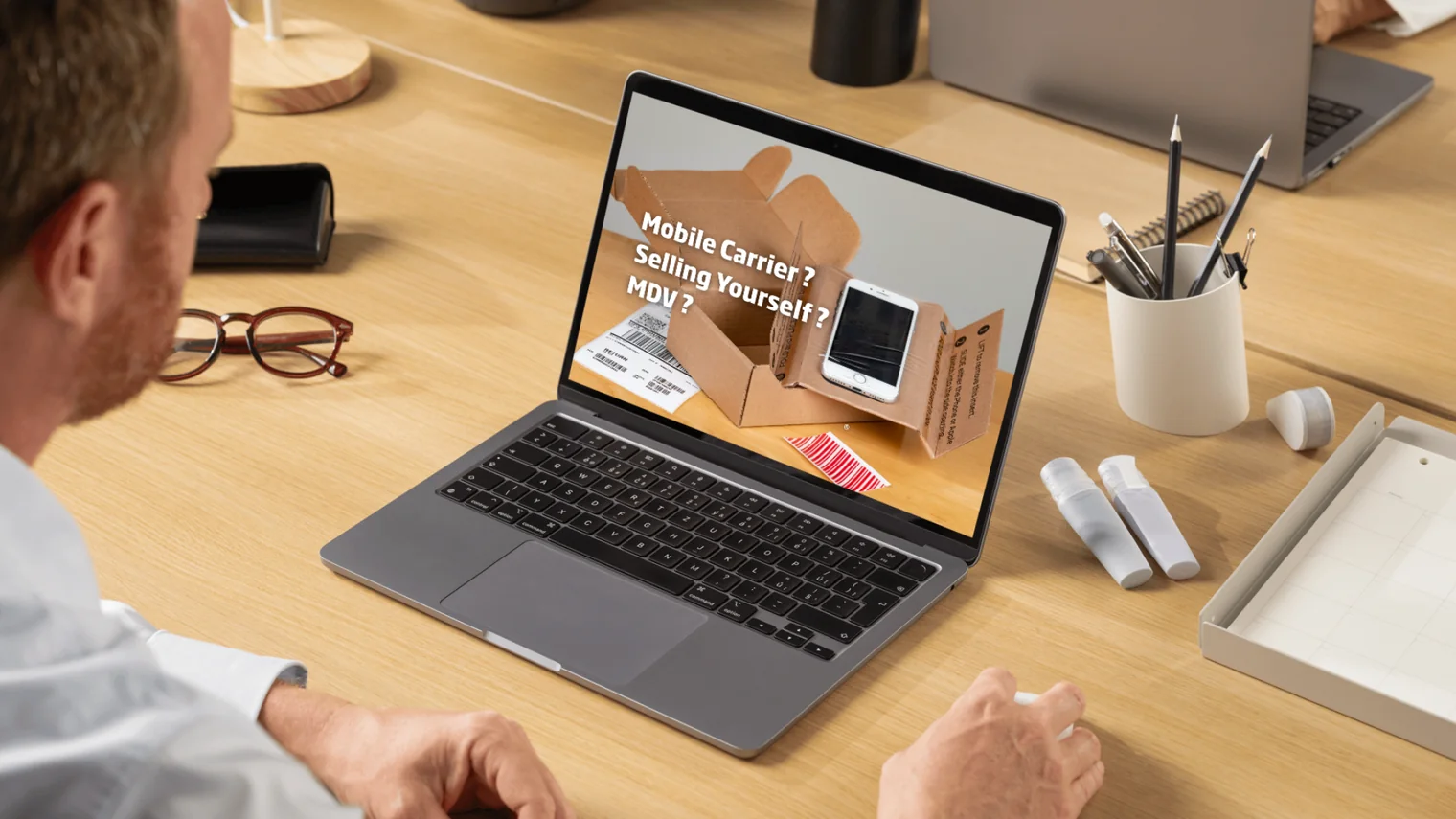
- Which routes exist for your device, because one of them is phones only
- What a carrier trade-in pays, and what collecting all of it costs you
- What each marketplace charges, from 3% to over 13% depending on category
- The swap, the empty box, and the returns fraud insurance will not cover
- Six questions that decide which route is yours
There is no single best way to sell a device. There is a best way to sell your device, and it depends on what the device is, how quickly you want the money, how much work you are willing to do, and whether you are staying with your carrier for the next three years.
Most articles on this question pick a winner and argue for it. This one will not, because the three routes are not competing for the same seller. A carrier promotion can genuinely be the largest sum available to you. It can also be worth a fraction of its headline. Which of those is true depends on facts about your situation rather than facts about the hardware.
Phones are the worked example throughout, because they are the most commonly sold device and the one with the most published numbers attached. Almost everything here applies equally to a tablet, a laptop, a smartwatch or a games console. Where it does not, and there is one significant place, it says so.
Every figure below is the platform's or carrier's own published number, linked to its source, and checked on 4 August 2026. Fees change, so check the link rather than trusting this page in a year.
First, how many routes do you actually have
This is the exception worth knowing before anything else.
Carrier trade-in is essentially a phone programme. Carriers take phones, and will sometimes take tablets and smartwatches on their own connected plans. They do not take laptops, desktops, games consoles, VR headsets or audio gear.
So if you are selling a MacBook, a console or a headset, the first route below does not exist for you and the decision is a two-way one: sell it yourself, or compare buyback offers. Skip to selling it yourself. If you are selling a phone, you have all three.
Carrier trade-in
Carrier promotions advertise the largest numbers you will see anywhere, and that is the first thing to understand about them, because the number is not cash.
A carrier trade-in pays in bill credits, spread across 36 monthly billing cycles. The credit lands on your statement, reducing what you owe rather than arriving in your account. To collect the full advertised amount you have to keep that line active for the entire term.
Verizon's own device deals FAQ is unusually direct about this. Promo credits "stop if you cancel your service on a line that's getting a promotion", and they also stop if you "change your mobile plan to one that's not eligible for the deal". The device has to remain on a qualifying plan for the entire term. AT&T and T-Mobile structure their promotions the same way.
Two consequences follow, and the second is the one that surprises people.
The first is straightforward arithmetic. Cancel in month 18 of 36 and you have collected about half of what the promotion advertised. The rest is gone. If you tend to switch carriers when a better deal appears, a 36 month credit is not worth its face value to you, and you should compare the half you will realistically collect.
The second is that the trade-in is usually bundled with an installment plan on the new device. If you leave, the credits stop but the installment balance does not. You can end up owing the remaining balance on the new handset in full, at the same moment the credits that were offsetting it disappear.
Worth knowing Before you accept a carrier promotion, work out how many months you realistically expect to keep that line, multiply the monthly credit by that number, and compare that figure against a cash offer. It is the only fair comparison, and it is rarely the one the advertisement invites.
None of this makes a carrier deal a bad choice. There are no selling fees, the process is simple, and if a promotion covers your exact model and you were staying put anyway, it is frequently the most money on the table. The trap is treating a 36 month credit as though it were cash today.
Selling it yourself
Listing privately gives you the highest ceiling and all of the work. You set the price, you keep the difference, and every part of the transaction is yours to manage. It is available for every device, which is more than can be said for the carrier route.
The ceiling is real. A private buyer is paying for something they intend to use, not for a device that has to be inspected, refurbished, warehoused and resold at a margin. That gap is why the number is higher.
What comes off the top is less obvious than most sellers expect, and it varies enormously by platform and by what you are selling.
What the marketplaces actually charge
The fee you pay to sell the same device differs by roughly four times depending on where you list it, and it moves again depending on what the device is. This is the single most underrated decision in a private sale.
| Platform | Seller fee | Plus |
|---|---|---|
| Swappa | 3% of the sale price | Payment processing, about 2.9% to 3.5% |
| Facebook Marketplace | 5% per shipment, or $0.40 flat under $8 | Nothing on local pickup, which is free |
| eBay | Category dependent, around 13% for phones and near 10.9% for computers and tablets | $0.40 per order, or $0.30 on orders of $10 or less |
Swappa is the cheapest of the three and is built specifically for devices, covering phones, tablets, laptops, watches and video games, which means the buyers arriving there already know what they are looking at. eBay is the most expensive by a wide margin, and its fee is charged on the total including shipping and tax rather than on the item price alone. Facebook charges nothing at all on a local cash handover, which for a bulky item like a desktop or a monitor is often the sensible route anyway.
On a $600 phone, that is roughly $18 to Swappa, $30 to Facebook, or close to $80 to eBay. The device did not change. The listing did.
Your device's category changes the eBay number
eBay does not have one rate. The final value fee is set per category, and the spread across categories runs from roughly 3% to 15%. Phones sit in one of the more expensive ones, at around 13.25% in Cell Phones and Accessories, while Computers, Tablets and Networking, which covers laptops, desktops, tablets and monitors, comes in near 10.9%.
That is a real difference. On the same $600 sale it is about $14 between selling something as a tablet and selling something as a phone. Check the rate for your specific category on eBay's page rather than assuming the headline number applies.
The eBay fee also depends on a subscription you probably should not buy
There is a second reason quoted eBay fees disagree with each other. The final value fee falls if you pay for a Store subscription, and eBay's Store selling fees page keeps two separate fee tables for exactly that reason: one for Starter subscribers and one for Basic, Premium, Anchor and Enterprise, each with its own row for Cell Phones and Accessories.
If you have no Store, or only the Starter tier, you pay the higher rate. Basic and above takes roughly 0.9 percentage points off. Those subscriptions are not free. At monthly renewal, eBay lists Starter at $7.95, Basic at $27.95, Premium at $74.95 and Anchor at $349.95 a month, with annual billing cheaper.
Run the arithmetic before you are tempted. Saving 0.9% only covers a $27.95 Basic subscription once you are selling about $3,100 a month. If you are selling one device, a Store will never pay for itself, and you should assume the higher rate applies to you. The discounted percentages quoted in most fee comparisons, including ones that do not mention a subscription at all, are the rates a business seller pays. They are not your rate.
Worth knowing eBay's percentages vary by category and by subscription tier, and have been adjusted more than once in recent years. Check the current figure on eBay's own fees page before you list, rather than trusting any third party's summary of it, including this one.
Shipping, and the $100 that is not enough
Shipping is where private sales go wrong most expensively, because the default coverage is far below what most devices are worth.
USPS Priority Mail includes up to $100 of insurance in the price. That is the whole of the automatic coverage. Ship a $900 phone or a $1,400 laptop with the default and lose it, and you are recovering $100. Additional coverage is available up to $5,000 and starts at around $2.80 depending on declared value, which is a rounding error against the device.
Buying the coverage is not optional. It is the cheapest insurance you will ever be offered relative to the downside. It matters more, not less, as the device gets more valuable, which is the opposite of how most people treat it.
The risk you cannot insure
The part most sellers underestimate is not loss in transit. It is the buyer.
Shipping insurance covers a parcel that vanishes. It does not cover a buyer who receives your working device, opens a return, and sends back something else. Phones attract this most, because they are valuable, easy to post and hard to tell apart in a photograph, but laptops, consoles and graphics cards are targeted the same way and for the same reasons. The recurring patterns are worth knowing by name:
- The swap: the buyer opens an item not as described case, and what comes back is a different unit. Sometimes an older model of the same shape, sometimes the same model with a cracked board or a swollen battery, sometimes a non-functional shop display dummy. With a laptop or a desktop it is often the same chassis with the RAM, the drive or the graphics card removed. The return tracking is legitimate, so on paper the buyer returned the item.
- The empty box: the return arrives as an empty box, or a padded envelope with nothing in it, occasionally weighted with a magazine or a block of card. The platform sees a delivered return and releases the refund.
- Item not received: the buyer claims the parcel never came, or that the box arrived empty at their end. Without signature confirmation this is difficult to disprove.
- The late chargeback: weeks after a clean delivery, the card issuer reverses the payment. The marketplace may or may not stand behind you.
None of these are exotic. They are the routine hazards of shipping a valuable, generic looking object to a stranger, and they are the strongest single argument for a local cash handover or a buyback service where the counterparty is a company with a return address.
If you do ship privately, the sellers who survive these do the same few things:
- Record the serial number before it leaves, the IMEI on a phone, and photograph it on the screen. On a laptop or console, photograph the serial on the case and the internals if you can.
- Film the packing in one unbroken take, from the serial on screen to the box being sealed and the label going on.
- Pay for signature confirmation and declare the real value.
- If a return comes back, weigh it before you open it and compare that against the weight on the outbound label, then film yourself opening it, again unbroken.
That is roughly fifteen minutes of work per sale, and it is the difference between a dispute you can evidence and one where it is your word against theirs. Whether that is worth the extra margin over a buyback offer is exactly the question this article is asking.
On a private sale you are the fraud department, the customer service team and the shipping department, and you carry the loss when one of those fails.
Sell it yourself when you have the time and want the highest possible number, and list on the cheapest platform that suits the device. Do not choose it because a listing price looks better than a quote, because a listing price is not what you bank.
Comparing buyback offers
The third route is a buyback service: a company that buys your device outright, inspects it, and pays you. Cash rather than credits, usually within days of arrival, with no selling fees and no listing to write. Unlike the carrier route, this one is open to every category, from phones through to VR headsets.
The obvious objection is that a buyback service pays less than a private sale, and it does. The less obvious problem is that buyback services differ from each other by more than most people expect for the same device in the same condition. One buyer's resale pipeline is built around a model another has no outlet for. Quoting a single service tells you what that service pays. It does not tell you what your device is worth.
This is the part MyDeviceValue does, and it is worth being exact about what that means.
We do not buy your device. We compare what vetted buyers will pay for it, rank them by payout with the highest first, and hand you to the buyer you choose. The sale, the shipping, the inspection and the payment all happen on that buyer's own site under their terms. No buyer pays for placement, and the ranking is payout order rather than a commercial arrangement.
Two answers change that ranking more than anything else. The first is condition, on our own four grade scale of Flawless, Good, Fair and Poor. The second is whether the device is financed, blacklisted or activation locked, which is a separate question rather than a grade, because a device can be in good condition and still carry one of those flags. Answer both honestly and the list re-prices in place, because a buyer who will not accept a financed handset should not be showing you a price for one. If that applies to you, we wrote about it separately.
One caveat applies to every buyback service, including the ones we rank. The documented pattern in this industry is a high online quote that drops after inspection. A locked quote is worth more than a larger headline number, and it is worth reading how a buyer handles a revised offer before you ship rather than after.
Six questions that decide it
The whole comparison, one row at a time.
| Carrier trade-in | Sell it yourself | Compare buyback offers | |
|---|---|---|---|
| Takes | Phones, some tablets and watches | Anything | Anything we list |
| Paid in | Bill credits | Cash, minus fees | Cash |
| You get it | Over 24 to 36 months | Whenever it sells | Days after arrival |
| Fees | None | 3% to over 13%, by platform and category | None |
| Strings attached | Qualifying plan, often a new line | None | None |
| If it goes wrong | Cancel the line and the rest of the credits stop | Chargebacks and device swap scams | Free returns on most offers |
| Pick it when | A promotion covers your exact model and you are staying two to three years | You have time to photograph, list, answer buyers and ship | You want the most cash without the listing or the risk |
The four ways this goes wrong
Whichever route you take, these are the failures worth knowing about in advance.
- The revised offer: a high online quote that drops sharply after inspection. Ask what happens if you decline the revision, and whether return shipping is free.
- Credits, not cash: a trade-in paid over 36 months is worth its face value only if you keep the line for all 36 months.
- Marketplace disputes: a buyer can force a return after the device has left your hands, sometimes unfairly.
- Shipping gaps: default Priority Mail coverage stops at $100, and topping it up costs a few dollars. Skipping it is the most expensive shortcut on this page.
So which one
Answer three questions honestly.
Is it a phone, are you staying with your carrier for the next two to three years, and does a current promotion cover your exact model? If all three are yes, price the carrier deal seriously. Multiply the monthly credit by the months you will actually stay, and it may well win.
Do you have several hours to spend, and are you comfortable carrying the dispute and shipping risk yourself? If yes, a private sale has the highest ceiling and you have a real chance of reaching it. List where the fee is lowest for your category.
Do you want the money in days, without a listing, without fees and without the risk? Then compare buyback offers and take the top one. Compare more than one, because the spread between buyers on the same device is the entire reason this site exists.
Frequently asked questions
Can I trade in a laptop or a console with my carrier?
Generally no. Carrier trade-in programmes cover phones, and sometimes tablets and smartwatches on their own connected plans. Laptops, desktops, consoles, VR headsets and audio gear are not part of them, so for those devices the choice is between selling privately and comparing buyback offers.
Is a carrier trade-in ever the best deal?
Yes, and reasonably often. If a promotion covers your specific model, you qualify for the required plan without paying more for it, and you intend to keep the line for the full credit term, the carrier number can beat everything else. The conditions are the whole question, not a footnote to it.
What happens to my trade-in credits if I switch carriers?
They stop. Verizon states that promo credits end if you cancel service on a line receiving a promotion, and the other major carriers work the same way. You keep the credits already applied and forfeit the rest. If the new device is on an installment plan, that balance remains yours.
Which marketplace is cheapest for selling a device?
Of the three main options, Swappa at 3% is the cheapest for a shipped sale, Facebook Marketplace charges 5% on shipped orders and nothing on local pickup, and eBay runs from roughly 10.9% for computers and tablets to around 13% for phones, plus a per-order fee. On a $600 phone that is a difference of roughly $62 between the cheapest and the most expensive.
Why do people quote different eBay fees?
Two reasons. eBay sets the fee per category, so a laptop and a phone are charged differently, and the fee also drops if you pay for a Store subscription. A business seller on the Basic tier or above pays roughly 0.9 percentage points less than someone with no Store, and many fee guides quote that discounted number without saying so. Selling a single device, the higher rate applies to you and a subscription would not pay for itself.
What is the most common scam when selling a device online?
The return swap. A buyer receives your working device, opens an item not as described case, and returns a different unit, a broken one, a stripped laptop, or occasionally an empty box or padded envelope. The tracking shows a legitimate return, so the refund is released. Recording the serial before shipping, filming the packing in one unbroken take, and weighing any return before opening it are the practical defences.
Is Priority Mail insurance enough for a device?
No, not by default. Priority Mail includes $100 of coverage, which is well below the value of most devices worth selling. Additional coverage is available up to $5,000 and costs a few dollars. Declare the real value.
Why do buyback services quote different prices for the same device?
Because they sell into different places. One buyer may have demand for a model another has no outlet for, and their inspection standards and refurbishment costs differ too. Same device, same condition, different number. That spread is why comparing is worth two minutes.
Does MyDeviceValue buy my device?
No. We compare what vetted buyers pay, rank them by payout with the highest first, and hand you to the buyer you pick. Everything after that, the shipping, the inspection and the payment, happens on that buyer's site under their terms.
Do I pay anything to compare offers?
No. Comparing is free and needs no account. Most buyers we rank also provide free tracked shipping and free returns, though those terms are theirs and worth reading on their site before you ship.
Can I sell a device that is still financed or locked?
Yes, though it changes both the payout and the list of buyers willing to take it. Financed, blacklisted and activation locked is a separate question from condition rather than a worse grade, and answering it honestly is what puts the right buyers in front of you.
What condition should I select if I am unsure?
Choose the grade you would defend to someone holding the device. Our grades are Flawless, Good, Fair and Poor, and Good is the common case. Each buyer applies its own criteria on arrival, so check the grading terms of whichever buyer you choose. Overstating condition does not raise your payout, it moves the disappointment to after you have shipped.
Sources
Every figure on this page came from the platform's or carrier's own documentation, checked on 4 August 2026.
- eBay selling fees: final value fees are set per category, and the per-order fee is $0.40, or $0.30 on orders of $10 or less.
- eBay Store selling fees: subscription prices at monthly renewal, Starter $7.95, Basic $27.95, Premium $74.95 and Anchor $349.95, and the separate final value fee tables that make a Store cheaper per sale.
- Swappa fees: "Listing is always free, but seller pays 3% of the sold price", plus payment processing.
- Meta Business Help Center: Marketplace selling fees on shipped orders, and the local pickup exemption.
- USPS insurance and extra services: "Priority Mail services include up to $100 of insurance in the price."
- Verizon device deals FAQs: promotional credit terms, the 36 month schedule, and what cancelling a line does to remaining credits.
Fees and promotional terms change without much notice. If you are making a decision worth several hundred dollars, open the link and check the current number.